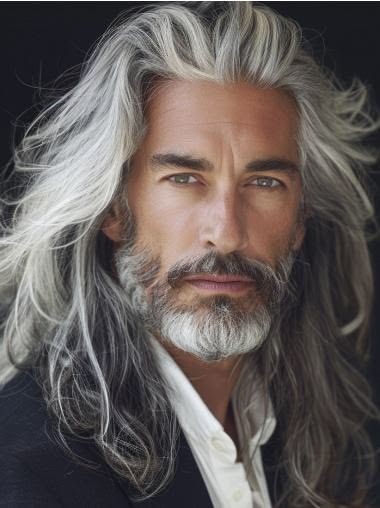
It started with the smell of rain and coal smoke. Voltai Range always carries a certain taste in the air—thin, metallic, edged with dust from the mines that claw through its mountainsides. That evening, it also carried the warm, sour reek of spilled ale and woodsmoke from the tavern clinging to the cliff road above the western shafts. I pulled my cloak tighter as we approached, boots crunching on cinder and gravel. The tavern hunched against the rock face like a barnacled ship, its sign swinging on a single chain. A crescent moon glinted off the jagged teeth of the peaks above, where Thurman’s mines tunneled into the Voltai Mountain Range like black veins.
Travis walked a half-step behind me, hands shoved into his belt, shoulders hunched as if the mountain wind itself annoyed him personally. “You know,” he muttered, “only a fool negotiates a contract in a place where the ale flows faster than sense.”
“I thought you liked taverns,” I said, pushing the door open. He snorted. “I like them after the work is done. Not when a drunken ore-crow thinks he can shave our price while I’m sober.”
The tavern swallowed us whole—heat, noise, and smoke pressing in all at once. It was crowded with miners in soot-stained clothes, their faces chiseled by exhaustion and lamp scars. Steel mugs clanged, dice rattled, someone cursed loudly in the back corner. The rafters were low and blackened from years of smoke, beams bowed slightly, reinforcing struts hammered into the stone walls to keep the mountain from collapsing inward.
I couldn’t help it. My eyes went to the bracing first, the joists, the joins. Years as builder had etched the habit into me: assess the structure, assess the risk. Travis caught my look and gave a sideways grin. “Don’t start,” he muttered. “You’ll be tearing down their ceiling and rebuilding it before we get our first drink.”
“Be grateful,” I said. “If it collapses, I’m standing closer to the door than you are.” He grunted, which for Travis counted as polite agreement.
We spotted Thurman almost immediately. He sat at a table near the back, tucked against a stone pillar that looked like it might have once been part of the mountain itself before someone carved a tavern around it. Thurman’s back was to the wall, of course; traders like him didn’t sit where they could be surrounded. He was a thick man—not just broad, but dense. Years of hauling ledgers and not ore had given him a soft kind of bulk, but the hands wrapped around his mug were corded with tendon and old scars. His hair was thinning, beard clipped close but already bristling with gray. He was halfway through a drink when he saw us and shouted over the noise.
“Alexander! Builder of Ar himself, slumming it in my mountains!” His voice carried the rough edge of someone who’d been testing the ale for quality all afternoon. “Thurman,” I said, threading my way through. “You picked a lovely venue.” He laughed, a short bark. “If you can’t taste grit in your drink, you’re not in Voltai.”
Travis dropped onto the bench opposite him. I sat beside Travis, back to the room. Habit again: I liked seeing the door, the exits, but Travis liked it more, and it wasn’t worth the small argument. He was my foreman—grumpy, loyal, capable—and if giving him the better vantage eased that constant bristle of his, I could spare the view.
A serving girl appeared, wiping foam off her hands with a rag that probably made things worse. “Two ales,” I said, “and whatever passes for stew.” “You got coin?” she shot back, all business. “We wouldn’t be here if we didn’t,” Travis said, digging out a small pouch and dropping a few coins into her hand with a clink.
Thurman lifted his mug. “Put it on my tab,” he declared. She gave him a look that could strip paint. “You still have a tab,” she said, “because you say that every time, Thurman.” He winked at her. “And yet you keep pouring.” She snorted, turned away, and vanished into the crowd. I folded my hands on the table. “You wanted to talk ore.”
“Ah, straight to it,” Thurman said, leaning back. “That’s what I like about you, Alexander. No dancing, no questions about my health, my mother, my last failed companionship .” “You’ve told me about your companionships enough,” I said. “Each time, you insist the next one will be wiser.” “Hope is cheap,” he said, shrugging, “unlike your proposed bracing.”
Our drinks arrived. The ale was darker than I liked, head already collapsing. The stew followed in chipped bowls—chunks of something that had once mooed, floated with the occasional potato, all beneath a layer of grease. Travis took one look and muttered, “If I die from this, I expect hazard pay.” I ignored him and turned back to Thurman. “You’ve been pushing output,” I said. “Your men are taking more ore than the tunnels can handle.”
“That’s the point,” he said. “There’s demand. The war in the east doesn’t feed itself. Steel ore is worth its weight in gold if you know where to sell it.” “And if the shafts collapse?” I asked. “You lose men, you lose ore, you lose your investment.” He rolled his eyes, lifting his mug again. “You always assume the worst. The tunnels stand. They’ve stood for years.”
“Because the rock’s been kind,” I said. “But the support beams I saw entering your main shaft—half the timbers are split, some are warped, and your deeper galleries have no secondary bracing.” Travis grunted his agreement. “Saw a cross-brace two fingers from shearing. Another couple months and your miners will be supporting that shaft with their backs.” Thurman waved us off. “You two are like old women gossiping about the weather. It might rain, the river might rise, the world might end. And in the meantime, I’m supposed to pay.”
“It’s not gossip,” I said. “It’s physics. Rock doesn’t care about your profit margin.” He leaned in suddenly, his breath heavy with ale. “And you, Alexander, do care? You care more for my men than I do?”
“I care for the work,” I said evenly. “I care for the structures that hold. For the people who trust them with their lives. If I build supports for your shafts, they’ll stand. And you’ll excavate more ore with fewer cave-ins, fewer delays, fewer funerals.” He chuckled, low and bitter. “You talk like a priest. Only your god is stone instead of mercy.”
Travis nudged my arm under the table. It was his way of saying: don’t let him bait you. “We came to negotiate,” I said. “Not sermonize.”
Thurman slammed his mug down, ale sloshing over his hand and the table. “Fine. Negotiate. You want better price on ore? You want me to sell you the steel stock cheap so you can build your pretty little supports and arches down in Ar? Then tell me what I get.” I met his gaze. “You get reinforced shafts. Proper supports. We’ll rebuild your main galleries. Cross-bracing, secondary columns, load-distribution arches. We stabilize your tunnels. In return, you sell us your refined ore at thirty percent below your current rate.”
He choked on his own laughter. “Thirty percent? Are you mad?” “Twenty-five,” I said. “But only because I like your tavern.” Travis snorted into his ale. Thurman’s face tightened. “This is extortion.”
“It’s a trade,” I said. “You pay us in ore, we pay you in structural integrity. Without our work, you’ll be hiring funerary priests instead of miners inside of a year.” His eyes narrowed. “And you’re so sure of that?” Travis leaned in. “I’ve been in collapses,” he said. “I’ve pulled men out from under beams. Dug through rubble to find someone who ran the wrong way at the wrong time. Rocks don’t argue, they just fall. Pay for supports now, or pay in blood later. Your choice.”
There was a beat of silence. The noise of the tavern pressed around us—laughter, shouting, the clink of mugs. Somewhere, a chair toppled over. The sound of a lute drifted faintly from the far corner, badly out of tune. Thurman lifted his mug and drained what was left in three long gulps. The foam clung to his beard. He slammed the mug down again, harder this time.
“Twenty,” he said. “I sell at twenty percent below. Any lower and I’m giving it away.”
“Twenty-five,” I replied. “You’re not just buying supports. You’re buying expansion. With my reinforcement, you can safely open deeper levels. More ore than you can haul.” His eyes gleamed for a moment at the word “deeper.” Greed has a certain shine—it lights up even the oldest, most exhausted faces.
“Twenty-two,” he said, voice tight. “And you pay for your own materials.” I shook my head. “You supply timber from your own forests. We’ll provide the design, the skilled labor, the stone. For twenty-four percent. Final offer.” We stared at each other across the trashed table. My fingers rested loosely near my mug, but my attention was on his shoulders, his breathing, the way the ale lent a jitter to his hands. He broke first, leaning back with a sigh. “You’re a bastard, Alexander.”
“So I’ve been told.” “Fine. Twenty-four.” He stuck his hand out. I took it, his palm hot and slightly slick with ale. His grip was strong, but mine didn’t waver. “We start work in three days,” I said. “I’ll send men to survey your shafts.”
Travis nodded approvingly, then signaled for another round of drinks with a lazy wave. “You won,” Thurman said, voice flat. “You should be smiling.” “This isn’t winning,” I said. “This is balance.” He sneered. “You think yourself noble. Builder of Ar, savior of miners, protector of arches. But you’re not the one down there with a pick. You’re the one above, counting coins and talking about leverage and load-bearing.”
“Careful,” Travis muttered. I didn’t look away from Thurman. “You’re drunk,” I said. “We’ve made our arrangement. Let’s not spoil it.” He laughed again, uglier this time. “Spoil it? Alexander, Alexander. You already have. You come into my mountain, into my tavern, and you tell me how to run my mine? You threaten me with collapses and deaths as if I don’t wake up every night hearing rock splitting in my dreams?”
His voice climbed, drawing attention from nearby tables. A circle of quiet formed around us, the way it does when a tavern senses a fight brewing. Men shifted on their benches, leaning in. Someone took a slow drink, savoring the spectacle. “Thurman,” I said, keeping my tone even. “We agreed. The ore. The supports. This is good for both of us.”
“Good for you,” he snapped. “More ore, cheaper ore, for your precious city. For Ar. While my men stay here, under my mountain, breathing dust and coughing blood.”
“And I’m offering to make their work safer,” I said. “You’re offering to own me,” he hissed. “To wrap your stone fingers around my shafts and squeeze. Any time Ar wants more, they’ll tug your leash, and you’ll tighten your grip on my throat.”
Then he stood. It was a slow, telegraphed motion, but the bench scraped loudly enough that every eye in the tavern turned. Travis shifted fractionally, his weight settling over his feet, his mug set down without a sound. Thurman towered over us, casting our table in shadow. His breath was a mixture of ale, anger, and stubbornness.
“I’ve dealt with traders,” he said, voice thickening. “I’ve dealt with bankers, tax collectors, corrupt foremen, even bandits who demanded a tithe at the pass. But men like you...” He jabbed a finger at my chest. “Men who think they know what’s best. Who talk about safety and structure as if the world can be built without breaking anything. You make me sick.”
My eyes tracked his hands. They were steady enough, despite the drink. Too steady. “You’re drunk,” I repeated. “Sit down, Thurman.” “Make me,” he whispered.
Behind me, Travis’ chair creaked. I knew that sound—three parts annoyance, one part readiness. I didn’t need to look at him to know his jaw was clenched tight enough to crack stone. “Thurman,” I said, keeping my voice low, even. “Walk away. We’ll talk again in the morning.”
He lunged. It wasn’t graceful, or particularly thought out. He came in with his weight, leading with his shoulder and his right hand, reaching for my throat like he could squeeze the deal out of me by force. His mug, still in his left hand, tipped, flinging the last dregs of ale into my face. The world slowed in that familiar way it sometimes does when danger is close enough to touch. I felt the splash of lukewarm drink, smelled the stale yeast and smoke as it hit my skin. I heard the scrape of Travis’ boots as he began to move, the gasp from someone nearby, the distant clatter of a dropped fork.
I moved too. My left hand snapped up, catching Thurman’s reaching wrist just before his fingers closed around my throat. My right hand planted against his shoulder, guiding his momentum past me. He was heavy, but not balanced, drunk weight leaning too far forward.
I twisted. Thurman’s arm pivoted, his shoulder rolling, his body turning just enough that his forward motion carried him past where I had been sitting. His legs tangled with the bench. For a heartbeat, he hovered, suspended between fall and recovery. Then he went down, hard. The tavern floor shook under the impact. His mug shattered, shards skittering across stone. Ale splashed over my boots, his sleeve, the bench. He swore, the word cut off by the breath he’d lost in the fall.
I stood, stepping back, giving myself space. My heart hammered, not from fear, but from the sharp, clean focus that comes when everything narrows to a single point. Thurman rolled onto his side, pushing himself up, rage burning in his eyes. His fist came up again, wild and sloppy but full of intent.
“Don’t,” I said, voice carrying more steel than the ore in his mines. He either didn’t hear me or didn’t care. He swung. I shifted my weight, let the punch glide past my jaw, felt the air of it brush my cheek. My hand caught his elbow, pulling his arm across his own body. My other hand snapped forward, knuckles landing hard against his sternum. Not a killing blow, but a reminder: breath is a fragile thing. He staggered back, wheezing.
Someone laughed nervously in the crowd. Travis finally spoke. “You done?” he asked Thurman, voice calm as storm clouds. “Because if you’re not, I’ve been looking for an excuse to knock you through that wall.”
Thurman’s eyes flared. He looked from me to Travis, then around at the watching faces. Miners he employed, men whose wages came from his ledgers, whose families ate because of his deals. Men who had just watched him swing blind at the builder who’d promised to keep their tunnels from killing them. He saw his reflection in their stares, and whatever he saw, he didn’t like. “Get out,” he rasped, one hand still pressed to his chest. “Get out of my tavern.” “This isn’t your tavern,” the serving girl said from somewhere behind him, but wisely kept her distance.
“Thurman,” I said, “You attacked me.” “And you defended yourself,” he spat. “Congratulations. You’re a hero. Now get out before I decide this deal isn’t worth the humiliation.” Travis stepped between us, folding his arms across his chest. “Deal’s signed in words,” he said. “You walk away now, you walk away from the supports.”
For a moment, I thought Thurman might say yes. Might throw it all away out of pride and liquor. Then his shoulders sagged.
“Supports stay,” he said, voice rough. “Ore price... stays. You... stay. Out. Of my sight. For tonight.” I nodded once. “We’ll send surveyors in three days. Be sober when they arrive.” He flinched, like the word itself stung.
Travis and I turned toward the door. The crowd melted away, making space. Miners watched us go with a mix of curiosity and something like relief. They hadn’t stepped in to stop their employer, but they’d seen who kept their temper, who kept their head. As we stepped out into the cold night air, the mountain wind hit my face, clearing away the last of the ale’s sting.
Travis exhaled slowly. “You all right?” “I’ve been worse,” I said. He snorted. “He came at you over a discount.”
“He came at me over control,” I said quietly. The peaks loomed black against the starlit sky. “Men like Thurman don’t like being reminded they’re not the strongest thing in their own mountains.” We started down the path toward our camp.
“You think he’ll honor the deal?” Travis asked. “Yes,” I said. “He’s greedy, not stupid. He knows what those supports mean. He just doesn’t like needing them.” Travis walked in silence for a moment. “You didn’t hit him as hard as you could have.”
“I hit him exactly as hard as I needed to,” I said. He grunted. “You always do. Annoying habit.” The wind picked up, carrying the faint echo of tavern noise down the slope. Somewhere above, in the shafts that threaded through the mountain, men were still working under old beams, old bracing. For a few more days, they’d have to trust luck instead of stone.
“We’ll fix it,” Travis said, surprising me. “I know,” I replied. He glanced sideways at me, eyes narrowed beneath his thick brows. “You sure? Because sometimes, talking to men like Thurman, I start to wonder if it’s worth the trouble. Let the rock fall where it wants. Less paperwork.”
“We build,” I said. “That’s what we do. Let others decide if it’s worth the trouble.” He shook his head, but there was a reluctant smile tugging at his mouth. “You and your balance.” We made our way down the mountain path, boots finding their own rhythm on the rough stone. Behind us, the tavern’s light flickered in the dark like a stubborn ember refusing to die.
In the morning, Thurman would wake with a bruised chest and a tender pride. The mountain wouldn’t care. But the braces we’d build inside it—that, it would respect. And in the long run, that mattered more than any tavern brawl or shouted insult.
Stone remembers. So do I.
Conversation
Be the first to join the conversation.